Advanced English Class
Topic: Advanced Linking Words
Showing Contrast (Instead of "but")
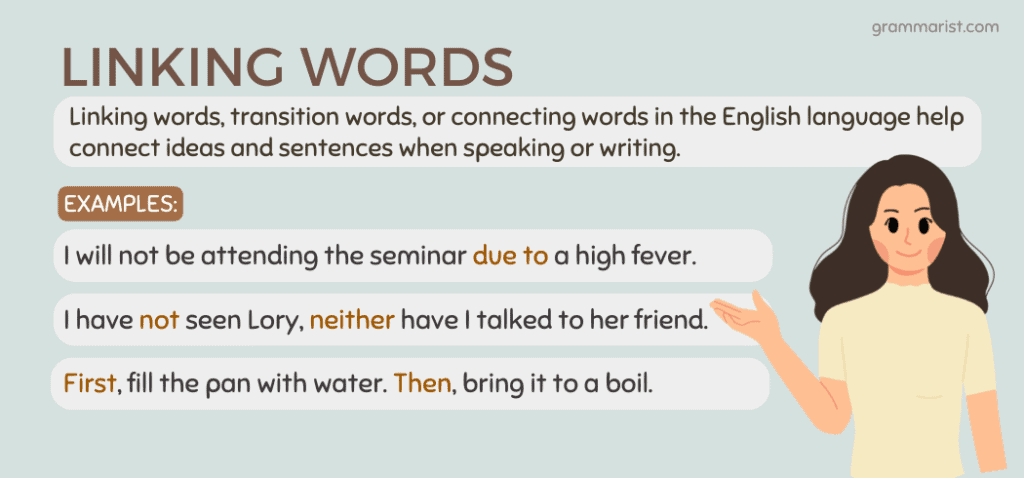
The word "but" is very common, but in advanced English you should vary your vocabulary. Using different contrast words makes your speaking and writing sound more professional and fluent.
Some advanced alternatives include however, nevertheless, on the other hand, whereas, although, and even though.
Example:
I wanted to go out; however, I was too tired.
Example:
Although I was tired, I decided to finish my work
🫑
Adding Information (Instead of "and")
Instead of always using "and", advanced speakers use linking words that add information more clearly and formally. This improves clarity and makes ideas sound more connected.
Some useful words include furthermore, moreover, in addition, and besides.
Example:
The movie was interesting; moreover, the acting was excellent.
Example:
The project was successful. Furthermore, it finished ahead of schedule.
Showing Cause and Effect
When explaining reasons or results, advanced English uses specific expressions that clearly show relationships between ideas.
Some useful expressions include therefore, thus, consequently, as a result, and since.
Example:
The roads were flooded; therefore, classes were canceled.
Example:
She studied every day; as a result, she passed the exam easily
Giving Examples
Giving examples helps explain ideas clearly, especially in essays and presentations. Advanced English uses specific phrases to introduce examples smoothly.
Some useful phrases include for instance, for example, such as, and namely.
Example:
Many countries face climate challenges, for example, rising sea levels.
Example:
Some fruits, such as mangoes and bananas, grow well in tropical climates.
- Teacher: Mauricio Alvarado
- Teacher: Diana Carolina Rodríguez Benítez